THE TRUE COST OF THE NARCO ECONOMY
An interactive research framework examining the economic, healthcare, social and human consequences associated with illegal drug markets — and asking what might happen if governments focused more resources on changing economic incentives, creating legitimate opportunity and reducing harm.
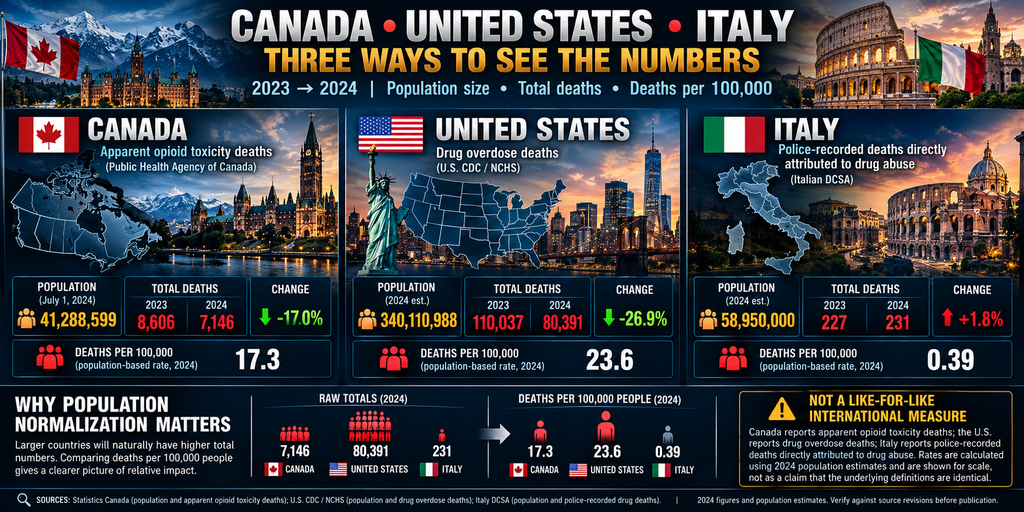
This page is a research and film-development concept. It does not claim that legalization, regulation or economic transition automatically eliminates organized crime, addiction, overdose deaths or government costs. Potential savings must be modeled and tested against evidence. Statistics shown here come from different countries, years and methodologies and should not be added together as though they represent one global total.
01 — THE SCALE OF THE PROBLEM
Selected documented figures that demonstrate the scale of drug-related economic and human costs.
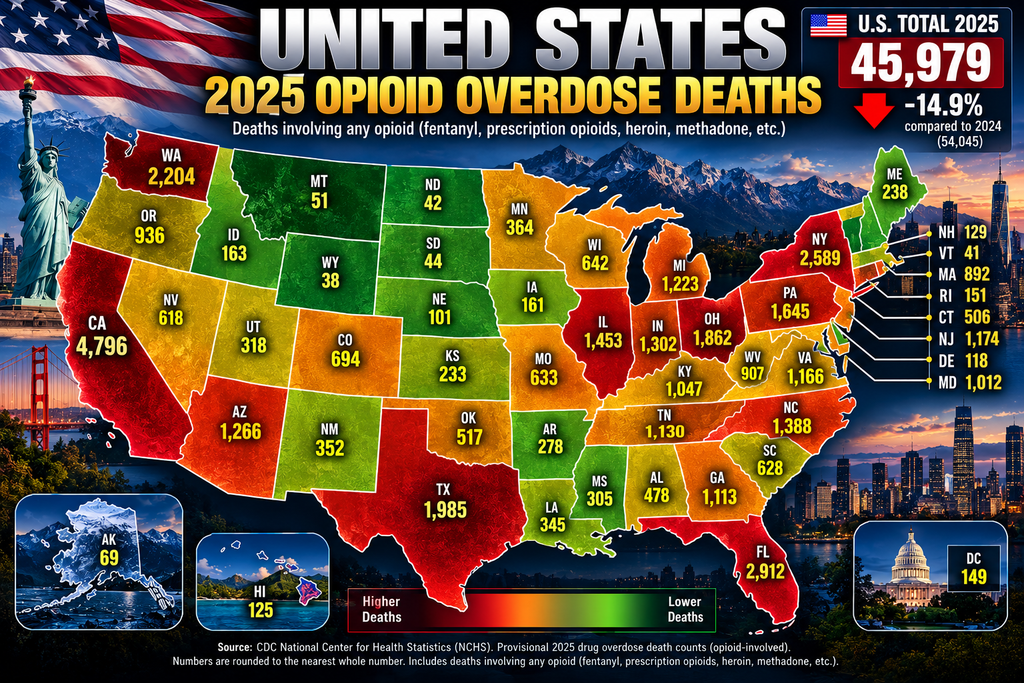
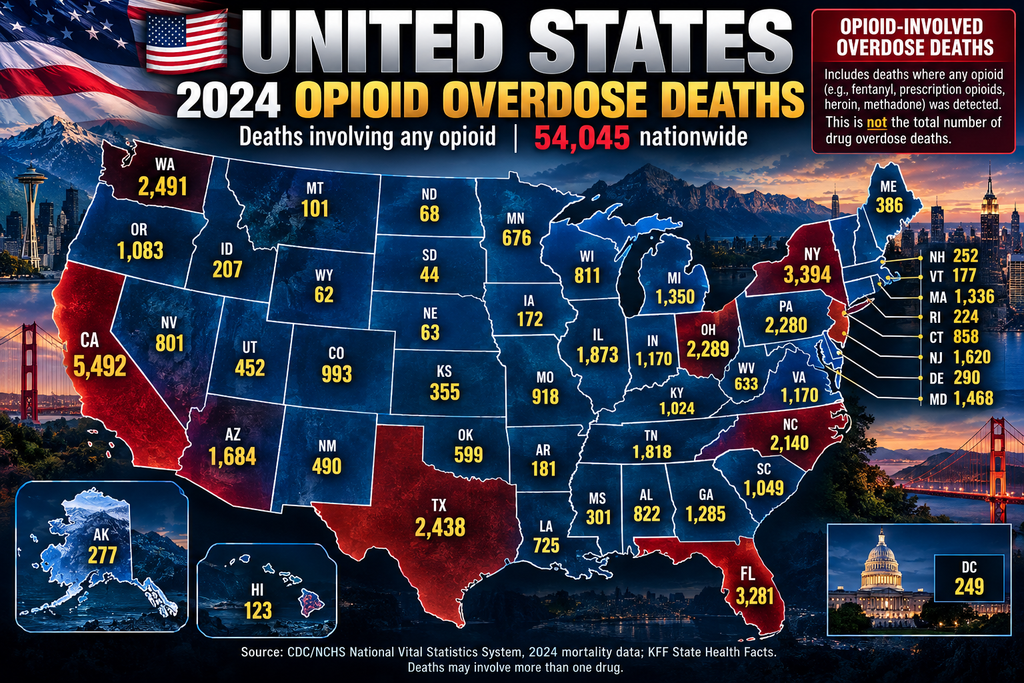
United States — Opioid Economic Cost
The U.S. Centers for Disease Control and Prevention reports that fatal opioid overdoses and opioid use disorder cost the United States approximately $1.02 trillion in 2017.
The estimate included healthcare, opioid-use-disorder treatment, criminal justice, lost productivity, reduced quality of life and the value associated with lives lost.
CDC reports approximately $31.3 billion in healthcare costs and $3.5 billion in opioid-use-disorder treatment costs within that estimate.
Source: U.S. Centers for Disease Control and Prevention, Economics of Injury and Violence Prevention.
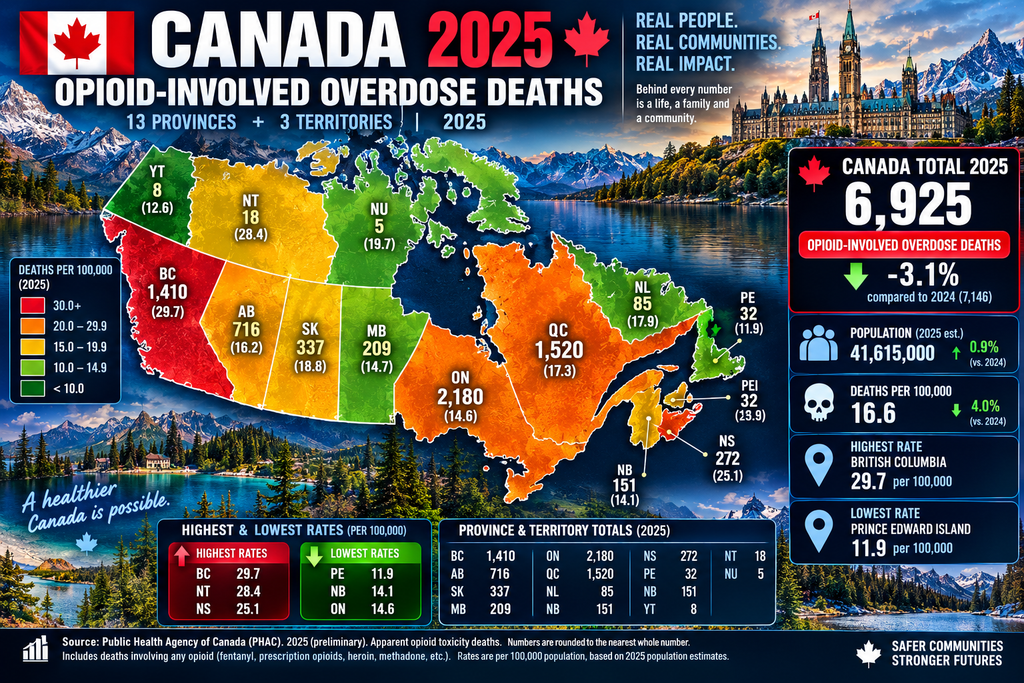
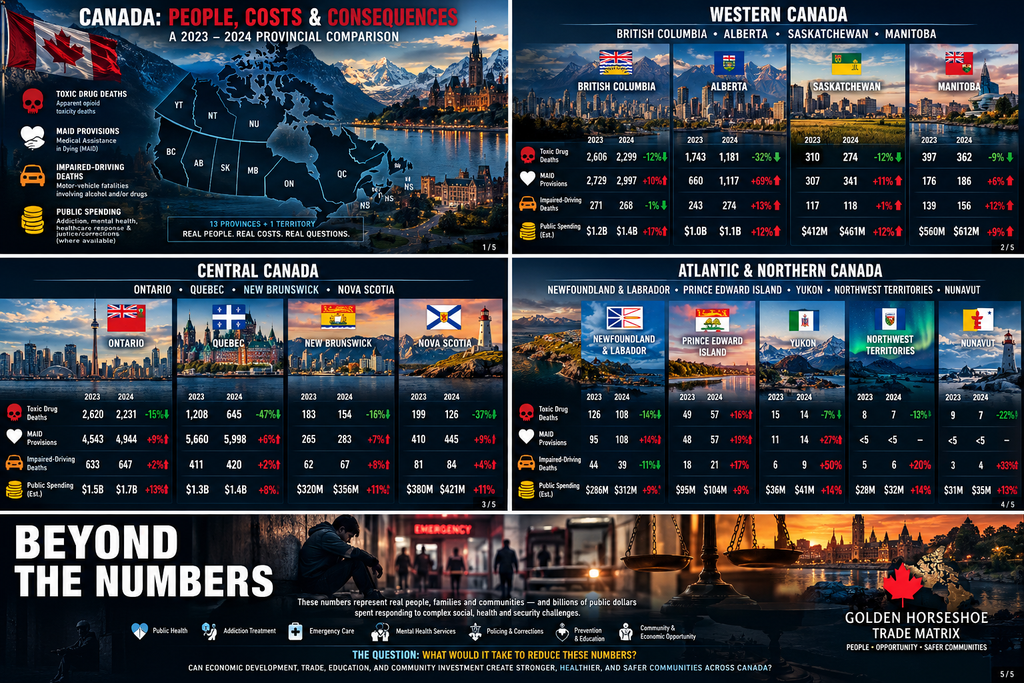
Canada — Substance Use Economic Cost
Canadian research estimated that substance use cost the Canadian economy $49.1 billion in 2020.
The reported categories included:
Lost productivity.
Healthcare costs.
Criminal justice costs.
Other direct costs.
The important limitation is that these figures cover substance use overall, not exclusively illegal drugs or organized narco activity.
Source: Canadian Centre on Substance Use and Addiction, Canadian Substance Use Costs and Harms.
Europe — Drug-Induced Deaths
The European Union Drugs Agency estimates a minimum of 7,589 drug-induced deaths in the European Union during 2024.
The EUDA emphasizes that the figure is a minimum estimate and that reporting methods differ between countries.
When Norway and Türkiye are included, the estimate rises to more than 8,300 deaths.
Source: European Union Drugs Agency, European Drug Report 2026.
02 — GOVERNMENT COST
Where public resources may be consumed by the illegal drug economy.
1 — Policing
Drug markets require investigations, surveillance, arrests, evidence processing, specialized units and continuing enforcement.
A transition that genuinely reduced illegal-market activity could potentially allow some resources to be redirected toward other public-safety priorities.
2 — Courts
Drug-related prosecutions consume resources across police, prosecutors, defence services, courts, evidence handling and administration.
Any potential savings would depend on how laws, enforcement priorities and criminal activity actually changed.
3 — Corrections
Prisons and correctional systems incur costs for incarceration, healthcare, staffing, rehabilitation and administration.
Reduced criminal-market involvement could potentially reduce some of these expenditures.
4 — Border Enforcement
Governments devote substantial resources to detecting and intercepting illicit trafficking.
A successful reduction in illegal trafficking could potentially change the demands placed on border agencies.
5 — Organized Crime Enforcement
Transnational drug markets can involve organized criminal networks, creating continuing investigative and enforcement demands.
The policy question for this project is whether changing economic incentives could reduce some of that demand.
03 — TAXPAYER & ECONOMIC EFFECTS
What could potentially change if economic activity moved from an underground market into legitimate structures?
6 — Taxable Economic Activity
Legal businesses operate inside the tax system. A legitimate economic structure could therefore create taxable transactions, payroll and business activity.
The actual tax effect would depend on the specific regulatory model, tax rates and consumer behaviour.
7 — Reduced Money-Laundering Pressure
Criminal markets require methods to conceal and move illicit proceeds.
Bringing economic activity into transparent systems could potentially make some financial flows easier to monitor.
8 — Reduced Corruption Pressure
Highly profitable illegal markets can create incentives for corruption and institutional interference.
Changing the profitability of the illegal market could potentially change those incentives.
9 — Legitimate Employment
A legal economic model could potentially create lawful employment opportunities for people who currently participate in criminal economies.
10 — Business Investment
The concept proposed for the film is that legitimate capital can be directed toward businesses, construction, infrastructure and productive investment rather than remaining inside an underground economy.
04 — THE HEALTHCARE BURDEN
The consequences of drug-related harm can continue long after a transaction has taken place.
11 — Emergency Departments
Overdose, poisoning, trauma and other acute drug-related events can require emergency medical intervention.
Reducing severe drug-related harm could potentially reduce some emergency-care demand.
12 — Hospitalization
Serious complications can require hospital treatment, intensive care and extended recovery.
The financial burden extends beyond the initial event when complications require continuing care.
13 — Addiction Treatment
Addiction treatment can involve physicians, medication, counselling, residential programs, outpatient care and long-term recovery services.
The objective should not be to remove treatment. The objective is to reduce preventable harm while maintaining access to treatment for people who need it.
14 — Infectious Disease
Some forms of drug use, particularly injection drug use, can increase risks associated with infectious diseases.
Those infections can create additional healthcare costs extending well beyond the original drug use.
15 — Long-Term Health & Rehabilitation
The medical consequences of substance use can include long-term physical health problems, mental-health treatment, rehabilitation and disability.
The real economic question is therefore not simply “What does an overdose cost?” It is also:
05 — THE HUMAN COST
Behind every statistic is a person, a family and a community.
16 — Premature Death
Fatal overdose and other drug-related deaths represent years of life that cannot be recovered.
Economic studies sometimes place a monetary value on lost life, but that accounting should never obscure the human loss behind the statistic.
17 — Lost Productivity
Substance-related illness, disability and premature death can reduce participation in the workforce.
Canadian research estimated $22.4 billion in lost productivity associated with substance use in 2020.
18 — Family Disruption
Addiction, incarceration, premature death, financial instability and untreated illness can affect spouses, parents and children.
The financial statistics cannot fully measure these consequences.
19 — Prevention, Treatment & Recovery
Any economic savings achieved through policy change should be evaluated partly by asking whether resources can be redirected toward prevention, treatment, recovery and community development.
20 — From Managing Consequences to Building Opportunity
This is the central DWWORKSHOP hypothesis:
↓
CREATE LEGITIMATE OPPORTUNITY
↓
REDUCE CRIMINAL-MARKET INCENTIVES
↓
REDUCE HUMAN & PUBLIC COSTS
↓
REINVEST IN PEOPLE & COMMUNITIES
This is a hypothesis for investigation, not a claim that the sequence is guaranteed to occur.
06 — THE POTENTIAL TRANSITION MODEL
A framework for the screenplay and future economic analysis.
Open the Proposed Economic Flow
↓
Enforcement + Violence + Hidden Money + Health Harm
↓
PUBLIC COST
↓
Policing + Courts + Corrections + Healthcare + Lost Productivity
↓
ALTERNATIVE MODEL
↓
Regulation + Legitimate Employment + Taxation + Treatment
↓
REINVESTMENT
↓
Business + Housing + Infrastructure + Recovery + Communities
The movie can explore the question:
What happens when a government tries to change the economics underneath a criminal market instead of relying exclusively on enforcement against the people participating in it?
07 — THE FIVE SONG STORY
The music provides the emotional narrative while this research page provides the evidence framework.
YOU CAN WALK AWAY
The Choice
TEN TIMES THE FUTURE
The Money
GIVE THEM SOMETHING BETTER
The Family
BUILD IT LEGAL
The Business
SAME PEOPLE, NEW DAY
The Future
08 — WRITERS’ ROOM
Questions for screenplay development and fact checking.
Question 1 — What would actually change?
Which costs would realistically decrease? Which costs would remain? Which new regulatory costs would appear?
Question 2 — Who pays?
Identify the taxpayer, healthcare system, employer, family and individual costs separately.
Question 3 — Who benefits?
Examine government, legitimate businesses, workers, families, healthcare systems and communities separately.
Question 4 — What could go wrong?
A serious screenplay should examine unintended consequences as well as intended benefits.
Possible issues include continued illegal markets, addiction, youth access, commercialization, regulatory costs and displacement of criminal activity.
Question 5 — What evidence is still missing?
Every major claim in the movie should be separated into:
Supported by a reliable source.
A modeled number with assumptions.
An idea that requires testing.
A story element created for the movie.
09 — SOURCE NOTES
Primary research organizations used for the initial evidence framework.
U.S. Centers for Disease Control and Prevention
Economic estimates concerning opioid use disorder, fatal opioid overdose, healthcare, treatment, criminal justice and productivity.
Canadian Centre on Substance Use and Addiction
Canadian Substance Use Costs and Harms research, including healthcare, productivity, criminal justice and other direct costs.
European Union Drugs Agency
European drug mortality, overdose, treatment, infectious-disease and drug-market research.
UN Office on Drugs and Crime
International research concerning drug markets, organized crime, trafficking, corruption and criminal-economy impacts.
FILM DEVELOPMENT PRINCIPLE
The purpose of this page is not to tell the audience what political decision to make.
The purpose is to give the writers a framework for asking a difficult question:
The screenplay can then explore the arguments, counterarguments, costs, benefits, risks and unintended consequences through its characters.